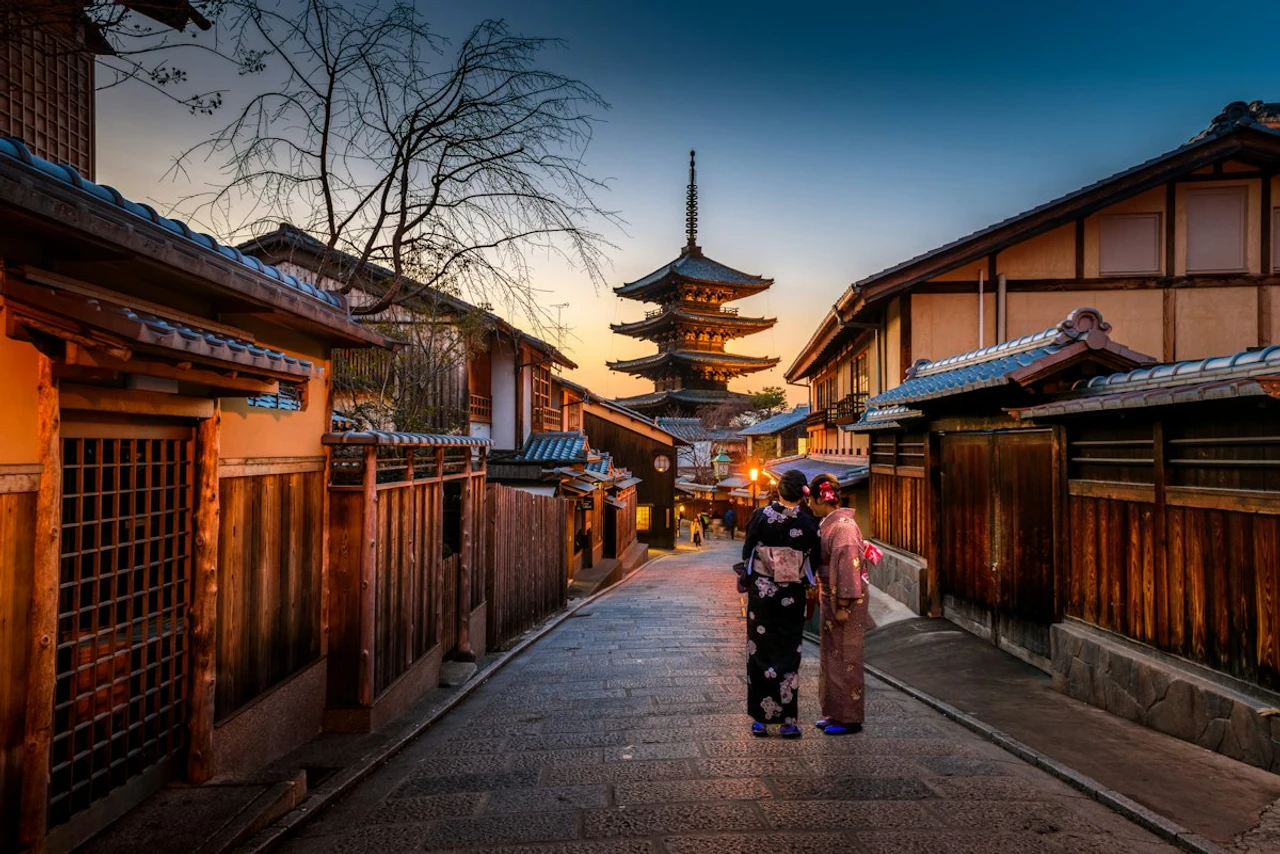
When dawn breaks over the Higashiyama hills, the cedarwood roofs of Kyoto shimmer with a faint indigo tint. Before the morning tourist coaches arrive at Kiyomizu-dera, the ancient capital belongs exclusively to the soft swish of bamboo brooms sweeping stone flagstones and the faint scent of roasting hojicha wafting from wooden machiya screens.
Kyoto is a city of layers. To truly understand its quiet rhythms, one must abandon the standard checklist of tour-bus highlights and walk the residential lanes of Kita-ku and the misty northern mountains of Takao. Here, centuries-old Zen philosophies are not museum exhibits—they are living practices etched into the daily choreography of local neighborhood life.
The Secret Moss Gardens of Northern Kyoto
While thousands converge on Arashiyama, few travelers venture twenty minutes north to Daitoku-ji. This sprawling temple complex contains twenty-two sub-temples, of which only a handful are open to the public at any given time. Step inside Zuihō-in, founded by the Christian daimyo Ōtomo Sōrin, and you will find an undulating dry stone garden representing the jagged waves of the Rough Sea of Japan.
The rake marks in the gravel are renewed every three mornings by resident monks with wooden combs. Sit on the polished wooden engawa (veranda), remove your footwear, and listen to the wind rustling through Japanese maples. Unlike the packed viewing decks of central Kyoto, you will often sit here in absolute silence, accompanied only by the distant chime of a bronze meditation bowl.
“A Kyoto garden is never designed to be admired in haste. It is a quiet dialogue between rock, moss, and the passing cloud—a reminder that beauty thrives in quiet spaces.”
Wandering the Alleys of Nishijin
Nishijin is Kyoto’s traditional weaving district, where master artisans have produced intricate silk kimonos and obi sashes for the Imperial court for over twelve centuries. Today, the hum of mechanical looms still echoes from behind slatted wooden lattice windows (koshi).
- Visit Orinasu-kan: An authentic machiya converted into a working silk heritage center where you can observe master weavers operating wooden handlooms.
- Sample Handmade Yuba: Stop at a neighborhood tofu workshop to taste fresh yuba (delicate tofu skin) served warm with grated ginger and dashi.
- Drink Matcha at a 180-Year-Old Kissaten: Unwind at Sarasa Nishijin, a converted sento (public bathhouse) lined with kaleidoscopic Majolica ceramic tiles from the Taishō period.
Practical Field Notes for the Slow Traveler
- Transit Strategy: Avoid the crowded city buses. Rent a three-speed mamachari bicycle or rely on the Keifuku Electric Railroad (Randen) to traverse the quiet western quarters.
- Temple Etiquette: Always carry clean white socks, as bare feet are strictly forbidden on sacred tatami mats. Avoid speaking in loud voices inside sub-temple meditation halls.
- Dining Reservations: Book neighborhood kappo-style dinners at least two weeks in advance. Look for humble curtains bearing the word obanzai (traditional Kyoto home-cooked dishes).

Tanisha Panwar
Senior Travel Editor & Cultural Specialist
Tanisha is a seasoned travel journalist and cultural heritage researcher with over eight years of field reporting across Europe, Asia, and Latin America. Specializing in historic architecture, local artisan traditions, and slow-paced itineraries, she uncovers the deeper human stories behind the world’s most compelling destinations.